Serial: Adnan’s Innocence


Adnan Syed in Prison

After I shared my opinions on the Serial podcast, I’ve been thinking about it and Adnan’s innocence for about a week now and I really can’t see how he was sentenced.

The case against him contradicts itself in places and is just based off of testimonies. That’s right, there is actually zero physical evidence against him, not finger-prints on Hae’s neck, not Adnan or even Jay’s DNA on the scene, nothing. This case is not difficult to poke holes in and in my opinion, would be dismissed if a re-trial was held.

First of all, on Serial’s own website, there is a series of testimonies from different people that sometimes contradict one another. In this case, Jay’s final testimony and Adnan’s father’s testimony contradict each other. Jay claims that Adnan and himself do the following, all in 45 minutes: meet at McDonalds, drive around for 45 minutes, bury Hae in the woods, drive to a mall and dispose of some of Hae’s clothes, drive to a Value City and dispose of the shovels, drive to a Super Fresh to dispose of Jay’s clothes, drop of Jay and have Adnan drive home. This all needs to  have been done in 45 minutes because Adnan’s father claims that Adnan went to mosque with his family at 8:00 (See Adnan’s testimony).

I’m not familiar with the area but even if all the places they stopped at were right next to each other, I still don’t believe that they could have done all that Jay claimed within the time-frame, even being generous and adding another 45 minutes it’s just not feasible.

Based on Adnan’s character, I don’t think he could have done it. No one, at any point in the podcast mentioned any personality disorders or mental disorders and no one said that he was prone to violent outbursts or anything like that. According to a news article from The Baltimore Sun, Hae still thought of Adnan as “one of her best friends”. As for the prosecution calling Adnan a liar. He only lies to his parents and doesn’t tell them about his girlfriend and use of alcohol because he’s a teenager. Being one myself, I know teenagers don’t want their parents knowing every aspect of their lives, especially if their Muslim background doesn’t allow it.


Hae Min Lee and her mother.


On the topic of Adnan’s age, I feel like too much of the case is based off of Adnan’s memory of that day. The prosecution thinks that it is a little bit “too convenient” that Adnan can’t remember that day and they once again call him a liar. It’s unfair to use the fact that someone can’t remember something against them. Koeing even demonstrates, at the start of the podcast, how unlikely it is that a teenager remembers a day that is just like any other day.

Also, on February 12th an anonymous call was made that told investigators to focus on Adnan. There are a few reasons that I find this suspicious. First of all, the anonymity could be for several reasons. Sure the caller could be trying to avoid Adnan’s wrath should he not be arrested but it could also have been because they themselves didn’t want to be suspected. The wording of the call is what makes it the most suspicious, the caller says to “focus on Adnan” so in other words, don’t focus on the possibility that it could have been someone else, such as the caller. To me, this call makes me think that the real killer got nervous and wanted to give the investigators a target.
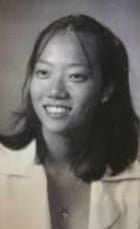
Hae Min Lee as Pictured in the High School Yearbook

Finally, there is some key medical evidence that is inconsistent with Jay’s timeline. Since Hae was buried on her side, through lividity, all her blood should have pooled on her side because of gravity. But because the blood had actually pooled on her front side, she must have been laid out on her stomach for at least 8 hours before burial. This just isn’t possible with the timeline we’ve been given.

Jay claims that Hae was in the trunk for about 4 hours, even assuming the the body could have been in a position for frontal lividity, there was not enough time for it to reach the levels found in the autopsy.

In conclusion, I feel like there’s just too many holes in the case of the prosecution for Adnan to be sentenced. There is medical evidence that Jay’s testimony, the testimony that is the backbone of the case, is false. There are too many loose ends like in the case of the anonymous caller or once again, Jay’s timeline for a complete, factual story to be told. If Adnan was truly considered “innocent until proven guilty” I don’t think he would have been sentenced.


Work Cited

“5 Key Findings from ‘Undisclosed’ That ‘Serial’ Missed.” EW.com, EW.com, 24 Aug. 2015, ew.com/article/2015/08/24/5-key-finding-undisclosed-serial-adnan-syed/.

“Timelines: January 13, 1999.” Serial, Serial, serialpodcast.org/maps/timelines-january-13-1999.

“Who, What, When.” Serial, Who What When, Serial, serialpodcast.org/maps/who-what-when.

“Ex-Boyfriend Is Charged in Teen’s Killing.” Tribunedigital-Baltimoresun, 1 Mar. 1999, articles.baltimoresun.com/1999-03-01/news/9903010074_1_min-lee-young-lee-woodlawn.

My Opinions on the Podcast Serial

I just finished listening to the first episode of the podcast Serial and I have to say I really enjoyed it. As part of the ENG4U course I enjoyed it because it was a really nice change of pace from the usual old poems with cryptic language or eighteen page essay on why modern writing is terrible. Instead of having to search for deep meaning that the author may or may not have intended to include I got to instead compare a number of obvious clues on my own, with less to interpret, just analyzing two different accounts of a story.

Outside of the ENG4U class, I enjoyed the podcast for what it is, a murder mystery with no clear ending. The fact that the podcast was based on a non-fiction source allowed the narrator to just tell us the facts and let us decide on our own. The topic was interesting and captivating enough that I found myself still thinking about it when I went to sleep that night. I might even keep listening to these while I’m on vacation.

Investigative journalism to me, is much more interested when presented in the form of a podcast. The inclusion of voice acting from other characters in the story and of course, the tone of the narrator keeps me interested a lot longer than if I was just reading the same facts off of a newspaper. As someone who listens to podcasts like this while on long drives, while studying or while going to sleep, I like being able to get the information without risking car-sickness or distraction from physically reading something.

Sometimes physically reading something is nice, but for me, I need very specific circumstances to fully enjoy reading something. To fully enjoy reading something like this, I would need to be comfortable with little to no stress from outside sources, like school. The main benefits of reading to me is the ability to visualize something more easily and the ability to easily re-read a portion of text to either better understand it or to analyze it for a deeper meaning.

Ideal environment for me to read without distraction

One of the most interesting parts of the podcast, was at the very beginning. The segment on the memory of teenagers. Quick refresher: the narrator talks about how almost no teenagers can remember details of a specific day because most days are just too similar. She then relates this to Adnan’s inability to remember what happened on the day of the murder. I don’t know about the rest of you, but I can’t remember what I ate for breakfast yesterday, much less very minor details like where I was at a specific time several weeks ago. Teenagers just don’t often have good memory.  Since pretty much all the evidence against and for Adnan is based on the accounts of other people. Just because someone testifies against me and I can’t remember what I was doing two weeks ago, could I end up in jail? Listening to the section on memory again, and thinking about it after hearing the rest of the podcast, it scares me how poor our memories are.


When I first listened to the podcast I thought about how the victim’s family might feel about this. The victim’s family may or may not like the idea of a story like this being so popular. On one hand, they may feel like the podcast does the victim justice, her story is being told and it may add even a little bit of closure to their death. On the other hand, hearing about the victim’s death again and in such detail may bring back bad memories of the time of their death and may also attract unwanted attention to them or other characters in the story since, as far as I know, no names have been changed in the podcast.

Consent of the victim’s family is not needed to create the show but I feel like the show would be of better quality and therefore more likely to be aired with cooperation from the family. If the family does cooperate, clearly they are okay with the popularity they might receive from the show.

Bit of a short post today. I really enjoyed listening to this, mostly because of how it made me feel. It makes me feel confused when I try to decide Adnan’s innocence for myself, it makes me feel afraid when I think about how he could be innocent and still in jail. Is anyone else legitimately considering listening to some more of these? I might have just found a new timesink for this summer.

The Many Archetypes in “The Immortal Life of Henrietta Lacks”

Since I learned about applying literary theories to text at the start of this course, I’ve so far only needed to apply them to fictional stories and poems. I thought that analyzing a nonfiction text with literary theories would be borderline impossible due to the precision of these real world events leaving little room for multiple interpretations. However, in reading The Immortal Life of Henrietta Lacks by Rebecca Skloot, I’ve proven myself wrong. The nonfiction story following the Life of Henrietta Lacks contains many symbolic archetypes and character archetypes that have been around in media for centuries and proves that life imitates art.

If I’m being honest, at first I had no idea how I was meant to find archetypes in a book about real world events but the writing style and inclusion of detailed descriptions of characters and events that I observed while reading the first half of the novel leaves a lot for the reader to interpret in their own way.

When I first started reading I was quickly introduced to the character the story is named after, Henrietta. While she may seem like a hero, all the lives that have been saved with her cells were saved without her knowledge. A much better candidate for the role of hero would be the author herself, Rebecca Skloot. A hero needs to overcome many obstacles and hardships in order to achieve their ultimate goal which is, in this case, telling the history of Henrietta Lacks and getting recognition for Henrietta’s family. Skloot has no shortage of obstacles to get past beginning with establishing communication with the Lackses.

A Hero's Journey as described by Joseph Campbell
A Hero’s Journey as described by Joseph Campbell

“‘Henrietta’s family won’t talk to you. They’ve had a terrible time with the HeLa cells.” (Skloot, 49)

After calling Deborah Lacks and being told that she won’t help her, Skloot needs to contact every other member of the Lacks family and after finally getting communication with Day she needs to travel all the way to Clover just to start building trust with them. While her journey doesn’t completely follow Joseph Campbell’s The Hero’s Journey she still falls into enough of the parameters that I believe she is a hero. Skloot starts off in “The Ordinary World” (Nuvotech Limited, N/A) completely unaware of Henrietta Lacks before being told about her by her Biology teacher. Her call to adventure begins when she realizes that Henrietta Lacks doesn’t appear in any of her encyclopedias and she wants to know why so little is known about her.

“That was it. I looked up HeLa in my parents’ encyclopedia, then my dictionary: No Henrietta.” (Skloot, 5)

Here she breaks the cycle by never meeting a mentor and never refusing her task but she does still “cross the threshold” (Nuvotech Limited, N/A) into Deborah’s world when she travels all the way to Clover to learn more about the Lackses. The first half of the book ends here, with Skloot having to change herself to adapt to Deborah’s lifestyle as to not offend her while gathering information. She is well on her way to being a hero and finally making Henrietta’s story common knowledge.
Another archetype I noticed while reading was the mad scientist archetype portrayed by Doctor George Gey. The mad scientist archetype is defined as someone who would attempt scientific advances not previously made due to either their implausibility or going against the wishes of one or more people, often for the greater good. Gey harvests and develops a method to keep cells alive forever in culture by using tumor cells found in Henrietta. This was done without consent from Henrietta and neither her or her family receive any benefits from this.

“The NFIP turned to Gey and a few other cell culture experts for help…” (Skloot, 94)

“So together, Reader and Vincent used HeLa cells as the springboard to launch the first industrial-scale, for-profit cell distribution center.” (Skloot, 101)

Another example of a mad scientist in literature was Doctor Victor Frankenstein from the story Frankenstein. Frankenstein attempts to defy the laws of nature by creating life, a task that would surely benefit humanity if properly executed. He manages to do what no man has done before and creates life. Unlike Gey, Frankenstein’s story ends in tragedy with his own lifes research killing him before dying himself.

A representation of Frankenstein’s Monster

“In about two years, he figures out how to bring a body made of human corpse pieces to life.”

When I started reading this I didn’t expect to find much symbolism outside of character archetypes but there are actually quite a few times where archetypal symbols appear in this book.

The first archetypal symbol I found was a storm shortly after the death of Henrietta. A storm represents change or the beginning of something bad or evil. The storm represents the change in the lives of everyone around her. It marks the start of Day being a single dad for five children. It marks the start of years of abuse for the children once their relatives move in. Lastly, it marks the start of the mass production of HeLa cells for profit. It also marks the start of something evil where the ones mass producing the HeLa cells don’t give back anything to the family that gave them this opportunity, they don’t even let them know what’s going on.

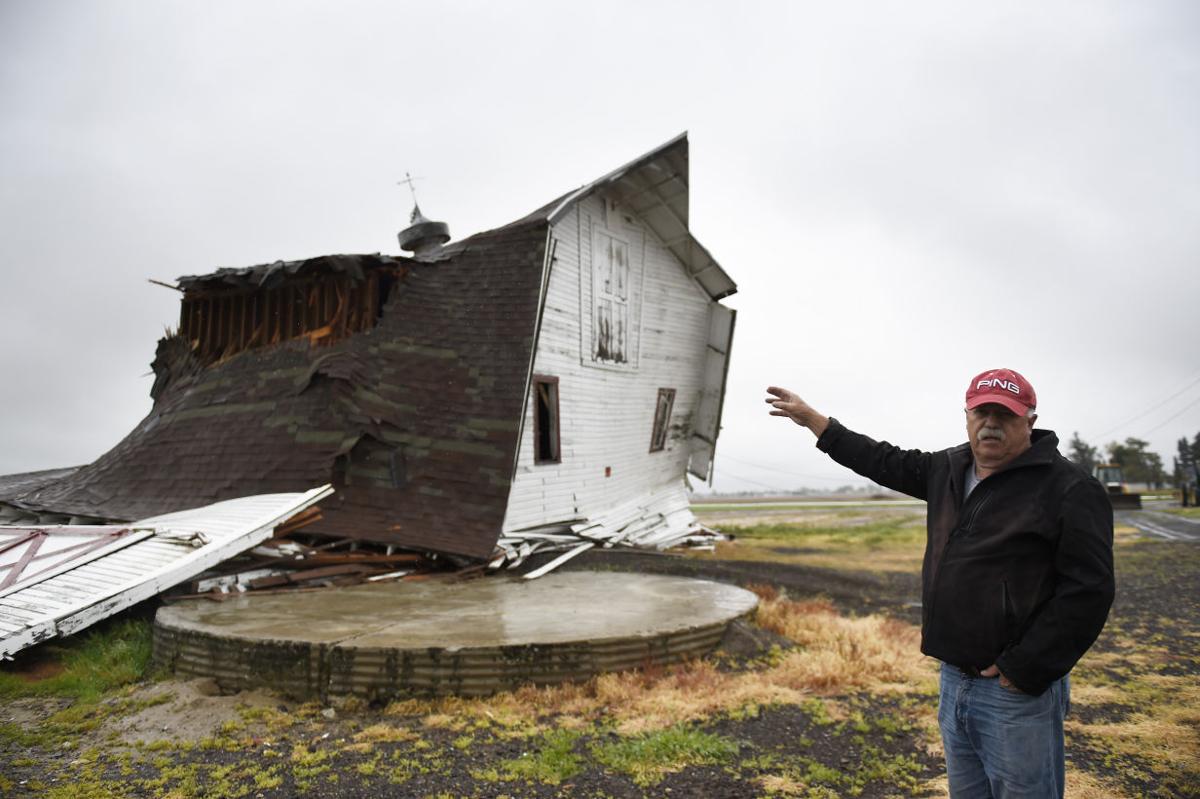
“The rain fell thick and fast. Then came long rumbling thunder, screams from babies and a blast of wind so strong it tore the metal roof off the barn below the cemetery and sent it flying through the air above Henrietta’s grave…” (Skloot, 92)

A barn destroyed in a storm

Another symbol I noticed was Henrietta’s association with the color red, for example her nail polish. Red primarily represents blood or passion and it was her blood, her sacrifice that allowed for the creation of these advances in medicine. I believe the inclusion of the color red was intended by the author due to the emphasis she puts on it when describing Henrietta’s appearance several times in the story. The story is less about Henrietta than it is about her blood sacrifice and what it can do for the world.

“Then Mary’s gaze fell on Henrietta’s feet, and she gasped: Henrietta’s toenails were covered in chipped bright red polish.” (Skloot, 90)

“She looks straight into the camera and smiles, hands on hips, dress suit neatly pressed, lips painted deep red.” (Skloot, 1)

An actor’s representation of Henrietta Lacks, featuring red lips and earrings

The final symbol I found was Henrietta associating the pain from her surgery with blackness. Black can represent the unknown or death which both tie in very well with Henrietta’s condition. She has an unknown condition, a new, unknown variety of cell that will eventually lead to her death. She describes the blackness as spreading through her, symbolizing the tumors spreading across her cervix.

“Lord, it just feels like that blackness be spreadin all inside me.” (Skloot, 48)

I’m personally really enjoying this book so far. It’s far more interesting than other books I’ve had to read throughout my English classes over the years. I’m most impressed with the amount of symbolism lying just below the surface despite the fact that this book is just a recollection of a true story. Sure, some emphasis and repetition of certain words help a reader notice but that doesn’t change the fact that these events really took place. I look forward to reading the rest of the story and further analyzing it.


Work Cited

Skloot, Rebecca. The Immortal Life of Henrietta Lacks. New York: Broadway, 2017. Print.

http://www.nuvotech.co.uk, Nuvotech Limited. “The Hero’s Journey – Mythic Structure of Joseph Campbell’s Monomyth.” Movie Outline – Screenwriting Software, http://www.movieoutline.com/articles/the-hero-journey-mythic-structure-of-joseph-campbell-monomyth.html.

“Archetypes.” Nuclear Medicine – Hillsborough Community College – HCC, http://www.hccfl.edu/index.html?aspxerrorpath=/media/724354/archetypesforliteraryanalysis.pdf>.

Shmoop Editorial Team. “Frankenstein Summary.” Shmoop, Shmoop University, 11 Nov. 2008, http://www.shmoop.com/frankenstein/summary.html.

Do We Really Need ENG4U?

To get into the great majority of University programs we need ENG4U, despite English being borderline irrelevant in programs such as sciences or math outside of creating understandable and comprehensible resources like lab reports and even these won’t require the levels of perfection that we’re required to show in our Grade 12 English courses. While I don’t think people going into specific fields like the ones I mentioned earlier should need to take ENG4U, I believe that they should still be required to take at least College English. I do think that ENG4U should be a requirement for fields where interpretation and context are important like Law.

I personally, am going into sciences in post secondary and what I’ve noticed so far through lab reports and case studies is that we try to simplify things as much as possible and spend much more time on the actual material and information we are trying to summarize than the grammar and detail required in ENG4U level essays and thesis’s. However, the quality taught in ENG4U allows these lab reports to look much more professional but due to the time it takes to proofread and comb through text for errors, this level of quality should, in my opinion, be saved only for the biggest, most important assignments like a semester-end thesis for your Master’s Degree. Another reason why ENG4U isn’t that helpful for science papers is because the way that many scientific papers are formatted are unlike anything we will learn in this course, using  informal structures such as lists and to a lesser extent, images, in formal papers. A good solution for this would be to introduce a “scientific English” course which would be used to teach students considering sciences as a career to properly write scientific papers.

But is there still a point to ENG4U?

In fields like Law, the way things are worded are extremely important because even a slight misconception can cause a large, borderline irreparable issue that can easily be exploited such as in the case of the Idaho “Zone of Death” where crime is essentially nonpunishable due to a loophole. I think that, to go into a field like this in post-secondary, ENG4U would be beneficial and

Image result for idaho zone of death
The “Zone of Death”

should definitely be a requirement. The level of precision required to be a lawyer or to help make laws is so much higher because of the need to be interpreted in one way only, where the general principles of most sciences prevent multiple interpretations. Another field where English is very important is History. What happens in history needs to be recorded in a clear and firm way to prevent common misconceptions over time such as in the case of Thomas Edison inventing the light bulb. He simply patented it but a good majority of people believe that historically, he invented it. This was likely due to an English error where a Historian confused patenting with inventing.

To summarize, I think that ENG4U has a valid reason for existing but it is just not for everybody. I agree that some University programs should require a student to take ENG4U but I disagree that all students should need it. A test in English proficiency is already standard at many Universities and requires a student to demonstrate the skills to get there ideas across at an acceptable level. I do believe that English in High School should expand to cover writing scientific papers through a new course and I also believe that a more modular English program could lead to more success in Post-Secondary for specific fields.

G. (n.d.). General Format for Writing a Scientific Paper. Retrieved from http://www.instruction.greenriver.edu/mcvay/b100/general_format_for_writing_a_sci.htm

Wolfe, K. (2017, July 19). The Zone of Death. Retrieved from https://www.atlasobscura.com/places/yellowstones-zone-of-death

Spector, D. (2012, June 03). 9 Common Misconceptions About Modern History. Retrieved from http://www.businessinsider.com/misconceptions-about-history-2012-5#thomas-edison-didnt-invent-the-first-lightbulb-5

English Language Proficiency Requirements. (n.d.). Retrieved from http://welcome.uwo.ca/admissions/admission_requirements/english_language_proficiency.html